How to Start a Solar Installation Business
Written and reviewed by the Solar Installer Accountants editorial team. Last reviewed 22 August 2026.
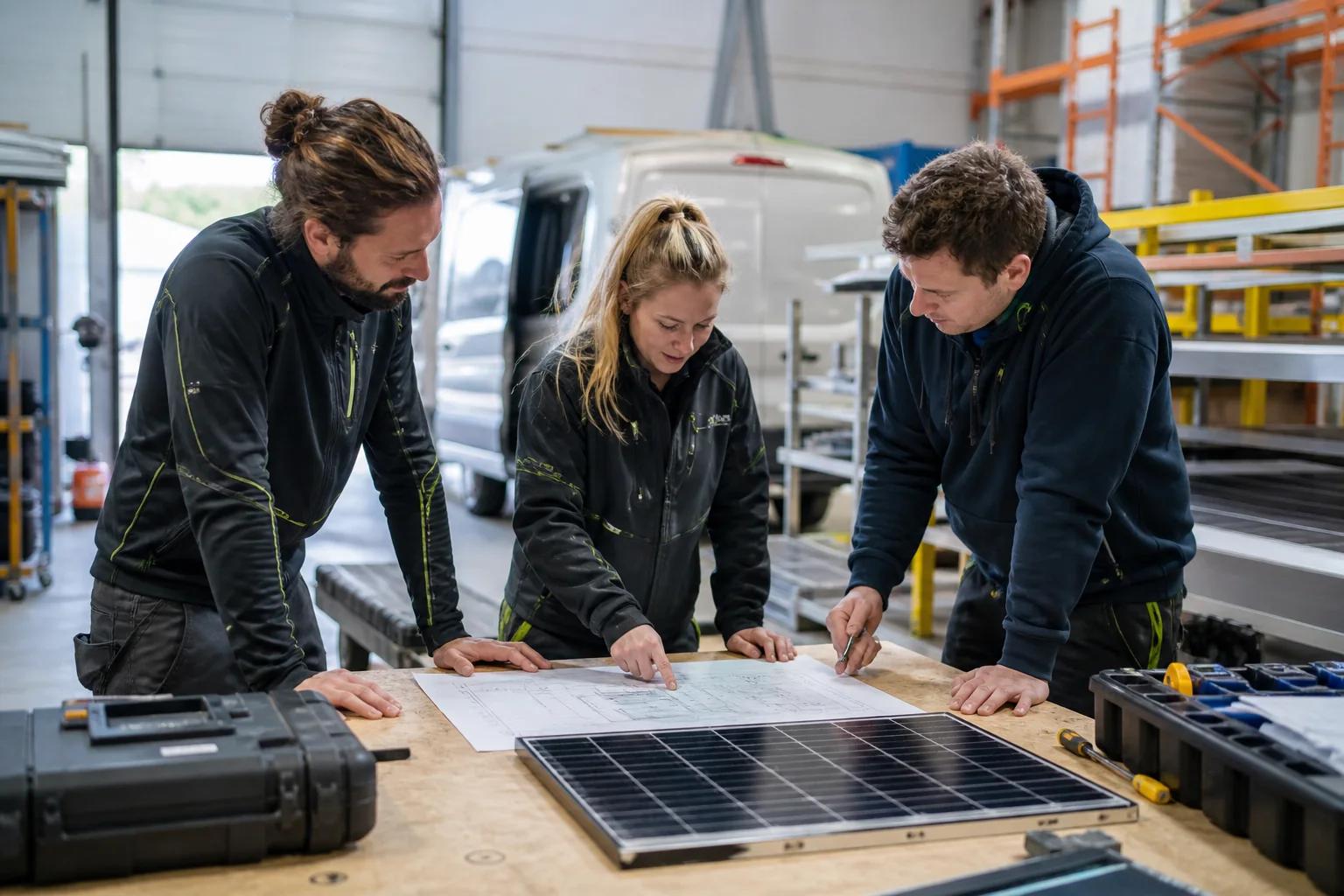
The technical route into solar is well covered elsewhere: qualifications, competent person scheme registration, certification. The financial setup is not, and it contains one decision specific to this trade that catches almost everyone who starts on domestic work.
This is the money side of starting up. What structure to trade through, what you have to register for and by when, and why a domestic solar installer meets VAT differently from every other trade.
Sole Trader or Limited Company
Start as a sole trader unless there is a reason not to. It is quicker, cheaper to run, and the accounts are simpler while you are working out whether the business works. You register for Self Assessment and pay tax on your profit.
The reasons to incorporate early are real but specific. Main contractors and commercial customers sometimes require it before they will engage you. Limited liability matters more once you are working at height on other people's roofs with employees. And once profits are consistently well above what you need to draw, the tax comparison starts to favour a company. None of those apply to a first-year installer doing domestic jobs, so the usual answer is to start simple and revisit it with actual numbers.
Note one thing for later: full expensing and the 50% first-year allowance are available only to companies. That sounds like an argument for incorporating, and it is not, because the Annual Investment Allowance reaches the same spending and is open to sole traders too.
What You Register For, and When
Self Assessment first. You need to register once you earn more than £1,000 in a tax year from the trade, and the deadline is 5 October following the end of the tax year in which you started. That is later than most people assume, and it is the source of a lot of unnecessary worry: starting in May does not mean you have missed anything. The setup guidance sets out what else has to be in place from day one, principally keeping records good enough to work out profit.
CIS next, but only if it applies. Working directly for homeowners does not bring you into it. Subcontracting to a builder or main contractor does, and registering keeps the deduction on your payments at 20% rather than 30%, which is a straight cashflow difference in your first year when it matters most.
Then the trade side: electrical competence registered with a competent person scheme such as NICEIC, and certification if you intend to sell to customers who want the Smart Export Guarantee. The order matters, because certification generally assumes the electrical registration is already in place.
The VAT Decision Is Different in This Trade
Here is the part specific to solar. Your domestic installation work is zero-rated, so you charge no VAT on it. But zero-rated sales are still taxable sales, and they count towards the £90,000 registration threshold exactly as standard-rated ones would. A busy first-year domestic installer can cross the threshold without ever having charged VAT to anyone.
That is not a trap so much as a decision arriving earlier than expected. Registering means charging your domestic customers nothing extra, because the rate is 0%, while recovering the VAT on the panels, inverters, batteries, van and tools you buy. For a business buying a lot of hardware, that is usually a repayment position on every return, which is real money rather than a technicality.
There is also an exemption from registration available where most of what you sell is zero-rated, which is worth knowing exists before you decide. Which way to go depends on your purchase volume and how much admin you want, and it is worth settling deliberately rather than by drifting over the threshold. The mechanics of the rate itself are covered under which buildings qualify.
First-Year Cashflow
Solar is harder on cash than most trades because the hardware is expensive and often paid for before the customer pays you. A single domestic job can tie up several thousand pounds of panels and a battery. Deposits are the usual answer, and they need to be structured so they cover the materials rather than just signalling commitment.
If you subcontract, CIS deductions come off your payments before you see them, so plan on being owed money for months. Getting the labour and materials split right on those invoices makes a substantial difference, because the deduction is not taken on materials you paid for directly.
Certification, training and insurance mostly land before the first invoice goes out, which is the other reason first-year cashflow is tight. They are deductible, but a deduction reduces tax rather than returning cash, and in a first year with modest profit the tax saving may be small. Budget for them as cash, not as a tax benefit.